
Call us now :08045476572
 Send Inquiry
 Send Inquiry
Polyurethane Insulation Services
MOQ : As per order , , Piece
Polyurethane Insulation Services Specification
- Layer
- Single or Multiple Layer as required
- Installation Guideline
- Applied via professional spraying equipment with safety measures
- Size
- Customizable as per project
- Density
- 42 Gram per cubic centimeter(g/cm3)
- Feature
- High thermal resistance, Closed-cell structure, Lightweight
- Surface Treatment
- Spray Applied, Smooth Finish
- Thermal Conductivity
- Low, ensures maximum insulation efficiency
- Coating Type
- Polyurethane Spray Coating
- Product Type
- Insulation Service
- Material
- Polyurethane Foam
- Rated Voltage
- 220 V
- Tensile Strength
- More than 200 kPa
- Width
- Standard Width 1 m
- Thickness
- 25 mm, 50 mm, or customized
- Application
- Thermal Insulation for Roofing, Walls, Cold Storage, Tanks, Pipelines
- Breakdown Voltage
- Greater than 25 kV
- Heat Conductivity
- 0.023 W/mK
- Color
- Light Yellow
- Max Withstanding Temperature
- -30C to +120C
- Safety Standard
- Conforms to IS: 12436 and ASTM C1029
- Moisture Resistance
- High, prevents corrosion and fungal growth
- VOC Emission
- Very Low
- Form
- On-site applied foam
- Adhesion Strength
- Excellent to concrete, metal, wood
- Environmental Compliance
- CFC and HCFC free
- Odor
- Odorless after application
- Compressive Strength
- 100250 kPa
- Weight
- Varies as per density and volume
- Fire Resistance
- Class B2 as per DIN 4102
- Service Life
- Up to 30 years
- Water Absorption
- Less than 1% by volume
- Closed Cell Content
- Above 90%
- Lead Time
- 15 days depending on area
Polyurethane Insulation Services Trade Information
- Supply Ability
- 01 , , Piece Per Month
- Delivery Time
- 1-4 Week
About Polyurethane Insulation Services
Our company is involved in manufacturing, exporting and supplying a broad assortment of Polyurethane Insulation Services. Our offered tank insulation service is render with quality proven basic material and the finest technology at our end. Given range of tank insulation service is accessible in various specifications, to satisfy our valuable clients. This tank insulation is broadly accredited among our customers for their cost effectiveness. Patrons can take the complete assortment of tank insulation services from us at reasonable rates.
Other detail:
- Low maintenance
- Rendered by experts
- Provide accurate insulation
- GI Pre coated
- Aluminium
- SS
- FRP
- Thickness of insulation varies as per the ambient temperature and the internal temperature of the tank to be maintained
- The density of Polyurethane foam insulation is maintained around 40kg/m3.
- Higher densities are also achieved as per the requirement of the customer
- PIR can also be used as an insulating material
- Dual insulation can also be done as per requirement of customer
- The risk for voids in the insulation is eliminated by the spray method
- No joints in the foam
- Homogeneous insulation
- Increased insulation efficiency
- Non-corrosive and watertight cladding
- No penetration or space for accumulation of moisture
- Excellent corrosion protection
- Good fire fighting properties
- Easy to Insulate Uneven Surfaces, Corners, Supports and Odd Geometrical Shapes
Superior Thermal Insulation
Polyurethane foam insulation provides exceptional thermal resistance, with a low heat conductivity of 0.023 W/mK. Its closed-cell technology ensures minimal energy loss, maintaining ideal temperatures for industrial and commercial spaces alike.
Durability and Safety
Engineered to withstand extreme temperatures (from -30C to +120C), our foam is highly durable with a service life of up to 30 years. Fire-rated to Class B2, it resists ignition while being odorless and low in VOC emissions for occupational safety.
Environmentally Responsible Solution
This insulation is environmentally compliantfree from CFCs and HCFCshelping you meet green certification requirements. Its spray application guarantees a seamless finish, adhesion to various substrates, and customizable project sizing.
FAQs of Polyurethane Insulation Services:
Q: How is polyurethane insulation applied during service?
A: Polyurethane insulation is sprayed directly onto surfaces such as roofing, walls, tanks, or pipelines using professional spraying equipment. Multiple layers can be applied to achieve desired thickness, and the process ensures strong adhesion to concrete, metal, and wood substrates.Q: What are the main benefits of this polyurethane insulation?
A: Key benefits include high thermal resistance, superior moisture and corrosion protection, fire resistance (Class B2), excellent adhesion, lightweight construction, and a lifespan of up to 30 years. The foams closed-cell structure prevents fungal growth and enhances energy efficiency.Q: Where can polyurethane spray insulation be used?
A: This insulation service is ideal for thermal insulation in roofing, building walls, cold storages, industrial tanks, and pipelines. Its versatile application makes it suitable for residential, commercial, and industrial projects requiring efficient temperature and moisture control.Q: When can I expect installation to be completed?
A: Lead time for installation ranges from 1 to 5 days depending on the project area and application complexity. Our team provides fast turnaround while ensuring thorough, professional application standards.Q: What environmental and safety standards does your insulation meet?
A: Our product is CFC- and HCFC-free, adheres to IS: 12436 and ASTM C1029 safety standards, and maintains very low VOC emissions, making it safe for indoor and outdoor environments. It is also odorless after application, ensuring comfort for occupants.Q: How does polyurethane insulation enhance energy efficiency?
A: The low thermal conductivity (0.023 W/mK) and closed-cell, seamless application drastically reduce heat transfer, lowering energy demands for cooling and heating, thereby reducing operational costs over the service life of the building or facility.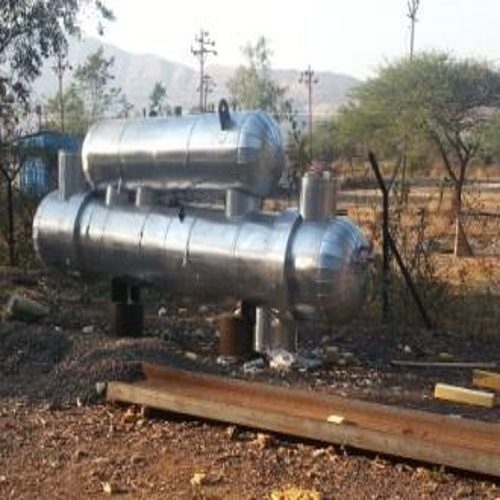
Tell us about your requirement

Price:
Quantity
Select Unit
- 50
- 100
- 200
- 250
- 500
- 1000+
Additional detail
Mobile number
Email

More Products in Vessel PUF Insulation Services Category
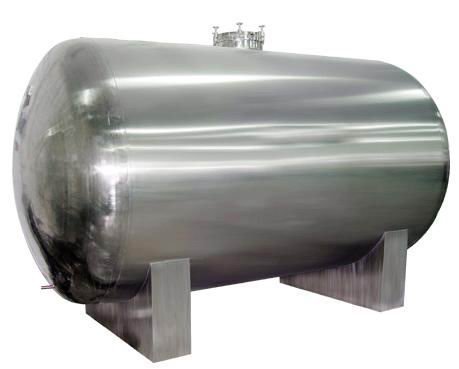
SS Tank PUF Insulated Services
Minimum Order Quantity : As per order , , Piece
Thermal Conductivity : 0.024 0.028 W/mK
Tensile Strength : >10 kg/cm (PUF)
Width : Customizable as per requirement
Color : Silver, natural stainless steel finish
Coating Type : PUF Foam Insulation Layer
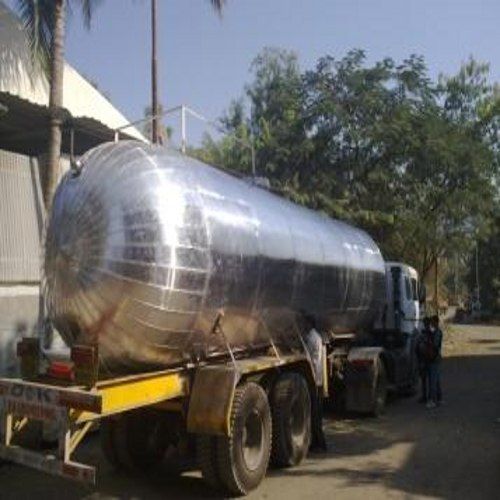
Tank PUF Insulation Services
Minimum Order Quantity : As per order , , Piece
Thermal Conductivity : 0.022 0.028 W/mK
Tensile Strength : >= 0.3 kg/cm
Width : Custom as per tank requirements
Color : Yellow (PUF), external cladding color as specified
Coating Type : Aluminum/GI cladding optional
Cold Tank PUF Insulation Services
Minimum Order Quantity : As per order , , Piece
Thermal Conductivity : 0.0210.023 W/mK
Tensile Strength : 0.20 N/mm
Width : Customized as per tank size
Color : Cream/Yellow
Coating Type : Protective Aluminium/PUF/PU Coating

Solar Tank PUF Insulation Services
Minimum Order Quantity : As per order , , Piece
Thermal Conductivity : 0.0210.024 W/mK
Tensile Strength : 0.3 to 0.7 kg/cm
Width : Variable as per tank size
Color : Yellow (PUF) with Aluminum/SS Cladding
Coating Type : External metallic cladding

 Send Inquiry
Our Products
- Polyurethane Panels
- Puf Pipe Support & Clamp
- Puf Slab
- Puf Sandwich Panel
- Puf Doors
- In-Situ Foaming
- Puf Pipe Section
- Polyurethane Pipe Support
- Polyurethane Door
- PUF Saddles
- Polyurethane Floors
- High Density PUF
- Porta Cabin PUF Insulation
- Refrigerator Van Insulation
- Rippening Chamber Insulation
- Pipeline Insulation Services
- PUF Insulated Roof Panel Services
- Vessel PUF Insulation Services
- Polyurethane Cold Storage Panels for Cold Storage
- Porta Cabins for Security Guards
- Puf Block
- Polyurethane Sheet
- Insulated Panels
- Tanker Insulation


R-875, TTC Industrial Area, Near Golden Garage, Rabale,Navi Mumbai - 400701, Maharashtra, India

Mr Sanjay Valsangkar
(Director)
Mobile :08045476572
 Send Inquiry
 Send SMS
 Call Me Free
Developed and Managed by Infocom Network Private Limited.
