
Call us now :08045476572
 Send Inquiry
 Send Inquiry
Stainless Steel Tank Polyurethane Insulation Servi
MOQ : As per order , , Piece
Stainless Steel Tank Polyurethane Insulation Servi Specification
- Surface Treatment
- Polished Stainless Steel
- Coating Type
- Polyurethane Foam Coating
- Feature
- Corrosion Resistant, Thermal Insulation, Durable
- Installation Guideline
- Vertical or Horizontal Placement, Site Installation
- Size
- Customizable as per requirement
- Thermal Conductivity
- 0.022 W/mK
- Layer
- Dual Layer - Stainless Steel with Polyurethane Insulation
- Density
- 45 Gram per cubic centimeter(g/cm3)
- Product Type
- Storage Tank with Insulation
- Material
- Stainless Steel with Polyurethane Insulation
- Rated Voltage
- 220V
- Tensile Strength
- >350 MPa (Stainless Steel)
- Width
- As per tank design
- Thickness
- 50 mm (Insulation)
- Application
- Hot and Cold Water Storage, Food Processing, Beverage, Chemical Storage
- Heat Conductivity
- 0.022 W/mK (Polyurethane)
- Color
- Silver (Stainless Steel Finish)
- Max Withstanding Temperature
- Up to 120C
- Tank Orientation
- Vertical or Horizontal
- Maintenance
- Low
- Corrosion Resistance
- High
- Insulation Thickness
- 50 mm standard, customizable
- Applicable Industries
- Pharmaceutical, Food & Beverage, Dairy, Chemical, Water Treatment
- Insulation Type
- Injected Polyurethane Foam
- Outer Shell Material
- Stainless Steel
- Capacity
- 500L-10000L or Customized
- Inner Shell Material
- SS304 or SS316
- Sealing Type
- Welded
Stainless Steel Tank Polyurethane Insulation Servi Trade Information
- Supply Ability
- 01 , , Piece Per Month
- Delivery Time
- 1-4 Week
About Stainless Steel Tank Polyurethane Insulation Servi
Product Description:
Our company is prominent as an eminent manufacturer, exporter and supplier of a wide array of Stainless Steel Tank Polyurethane Insulation Services. We also provide dual insulation as per requirement of customer. Our offered tank insulation service is given various specifications options. The offered tank insulation service is execute by utilizing basic material of finer quality and updated technology at our end. According to the market norms, we are giving the tank insulation service as per the customers requirements in number of stipulations competitive rates.
Other Details:
Other Details:
- Easy to execute
- Cost effective
- Reliable
- The risk for voids in the insulation is eliminated by the spray method
- No joints in the foam
- Homogeneous insulation
- Increased insulation efficiency
- Increased tightness
- Non-corrosive and watertight cladding
- Complete bonding to all surfaces
- No penetration or space for accumulation of moisture
- Excellent corrosion protection
- Good fire fighting properties
- Easy to Insulate Uneven Surfaces, Corners, Supports and Odd Geometrical Shapes
Efficient Polyurethane Insulation Technology
Our tanks feature injected polyurethane foam insulation with a standard thickness of 50 mm, delivering superior thermal retention. With a low heat conductivity of 0.022 W/mK, these tanks effectively minimize temperature fluctuations, maintaining product integrity for hot or cold storage needs in diverse industry settings.
Customizable Design and Versatile Installation
The tank sizes, widths, and orientations can be fully customized to suit specific site or application requirements. Both vertical and horizontal placement options are available, and installation guidelines ensure optimal setup whether for onsite assembly or direct placement, enhancing adaptability for facility layouts.
Durability and Hygiene for Demanding Applications
Constructed from high-grade stainless steel (SS304/SS316) with a polished finish, these tanks are highly resistant to corrosion and chemical interactions. The dual-layer design and welded sealing provide further protection, minimizing maintenance and maximizing cleanliness, essential for industries such as pharmaceuticals, food processing, and water treatment.
FAQs of Stainless Steel Tank Polyurethane Insulation Servi:
Q: How is the polyurethane insulation injected into the stainless steel tank?
A: During the manufacturing process, polyurethane foam is injected between the inner and outer stainless steel shells, creating a uniform insulation layer with a thickness of 50 mm (or greater, if customized). This method ensures effective thermal insulation and a smooth, sealed finish.Q: What industries can benefit from using these insulated tanks?
A: These tanks are extensively used in pharmaceutical, food & beverage, dairy, chemical, and water treatment sectors, due to their hygiene, durability, and superior insulation properties. Their design supports rigorous quality demands and safe storage of sensitive materials.Q: When should I choose vertical versus horizontal tank orientation?
A: Vertical tanks are ideal for installations with limited floor space or where gravity feed is preferred. Horizontal tanks suit spaces with height constraints or applications requiring easy access and maintenance. Both options are available and can be tailored to specific site needs.Q: Where can these tanks be installed?
A: The tanks can be installed onsite in a variety of settings, including industrial facilities, production plants, and water treatment sites. Installation guidelines assist in selecting the optimal placement and securing the tank, whether for new builds or retrofit projects.Q: What is the maintenance process for these tanks?
A: Maintenance is minimal due to the corrosion-resistant stainless steel construction and welded sealing. Routine checks for external cleanliness and inspection of welds are recommended, but these tanks are engineered for long-lasting, low-maintenance use.Q: How does the insulation improve energy efficiency and product safety?
A: Injected polyurethane foam dramatically reduces heat transfer, stabilizing internal temperatures and minimizing energy loss. This ensures energy-efficient operation, preserves product quality, and boosts safety for hot and cold storage applications.Q: What are the key benefits of choosing a dual-layer stainless steel tank with polyurethane insulation?
A: Main advantages include enhanced thermal efficiency, corrosion resistance, durability, and low-maintenance requirements. The dual-layer setup safeguards contents from temperature extremes and environmental hazards, perfect for demanding industrial applications.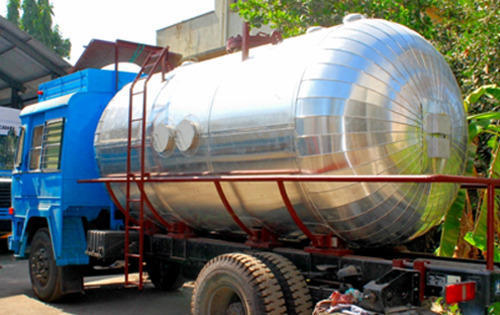
Tell us about your requirement

Price:
Quantity
Select Unit
- 50
- 100
- 200
- 250
- 500
- 1000+
Additional detail
Mobile number
Email

More Products in Vessel PUF Insulation Services Category
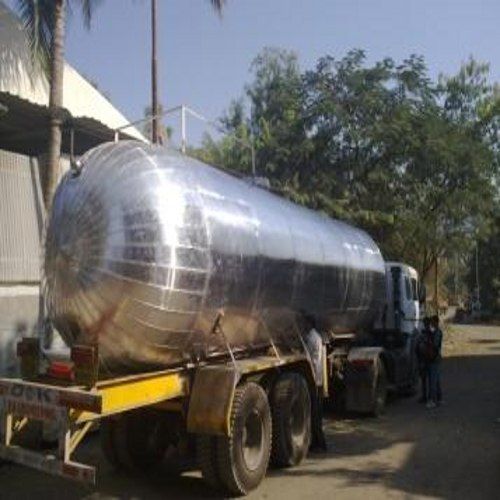
Tank PUF Insulation Services
Minimum Order Quantity : As per order , , Piece
Installation Guideline : Follows IS & ASTM standards, installed by skilled professionals
Coating Type : Aluminum/GI cladding optional
Feature : High thermal efficiency, moisture resistance, seamless insulation
Color : Yellow (PUF), external cladding color as specified
Size : Customizable as per project needs
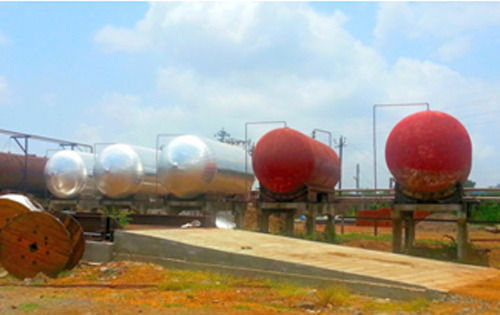
Storage Tank PUF Insulation Services
Minimum Order Quantity : As per order , , Piece
Installation Guideline : Onsite application by skilled professionals in compliance with the safety norms
Coating Type : Aluminium/Bituminous as per project
Feature : High thermal efficiency, Moisture resistance, Long service life
Color : White / Silver (Aluminium Finish)
Size : Customfitted as per tank dimensions
Cold Tank PUF Insulation Services
Minimum Order Quantity : As per order , , Piece
Installation Guideline : Onsite, Spray Applied or Slab/Panel Fixing as per tank design
Coating Type : Protective Aluminium/PUF/PU Coating
Feature : Moisture Resistance, High Thermal Efficiency, Durable
Color : Cream/Yellow
Size : Tailormade as per requirements

Solar Tank PUF Insulation Services
Minimum Order Quantity : As per order , , Piece
Installation Guideline : Onsite application by skilled professionals adhering to safety standards
Coating Type : External metallic cladding
Feature : High thermal resistance, durable, vapor proof
Color : Yellow (PUF) with Aluminum/SS Cladding
Size : Customized as per requirement

 Send Inquiry
Our Products
- Polyurethane Panels
- Puf Pipe Support & Clamp
- Puf Slab
- Puf Sandwich Panel
- Puf Doors
- In-Situ Foaming
- Puf Pipe Section
- Polyurethane Pipe Support
- Polyurethane Door
- PUF Saddles
- Polyurethane Floors
- High Density PUF
- Porta Cabin PUF Insulation
- Refrigerator Van Insulation
- Rippening Chamber Insulation
- Pipeline Insulation Services
- PUF Insulated Roof Panel Services
- Vessel PUF Insulation Services
- Polyurethane Cold Storage Panels for Cold Storage
- Porta Cabins for Security Guards
- Puf Block
- Polyurethane Sheet
- Insulated Panels
- Tanker Insulation


R-875, TTC Industrial Area, Near Golden Garage, Rabale,Navi Mumbai - 400701, Maharashtra, India

Mr Sanjay Valsangkar
(Director)
Mobile :08045476572
 Send Inquiry
 Send SMS
 Call Me Free
Developed and Managed by Infocom Network Private Limited.
