
Call us now :08045476572
 Send Inquiry
 Send Inquiry
Tanker Insulations
MOQ : As per order , , Piece
Tanker Insulations Specification
- Thickness
- Typically 50 mm to 100 mm, customizable
- Features
- Waterproof, Fire Retardant, High Durability, Low Thermal Conductivity
- Machines Type
- Tanker body, road tankers, storage tankers
- Diameter
- Custom fit as per tanker
- Purity
- Standardindustrial insulation purity
- Color
- Silver/White/Grey (standard cladding colors)
- Material Grade
- Industrial grade insulation material
- Load Capacity
- Designed to withstand tanker load and pressure
- Usage
- Temperature maintenance and product protection
- Form
- Solid panels/sheets
- Installation Type
- On-site manual/automatic installation
- Application
- Tankers for transportation of chemicals, food products, petroleum, and cryogenic liquids
- Product Type
- Tanker Insulation
- Main Material
- Polyurethane Foam (PUF), Glass Wool, Rock Wool, or Mineral Wool
- Surface Treatment
- Aluminum/SS Cladding, Polished, or Painted
- Size
- Custom as per tanker dimensions
- Weight
- Varies as per insulation and cladding type
- Feature
- Weatherproof, Energy Saving, Corrosion Resistant, Light Weight
- Shape
- Curved panels or sheets
- Thermal Conductivity
- 0.022 0.045 W/mK (material dependent)
- Density
- 35-48 kg/m (PUF), 40-100 kg/m (mineral wool)
- Water Absorption
- < 1% by volume
- Fire Rating
- Class 1/Class O as required
- Sound Absorption
- High sound dampening properties (optional)
- Service Life
- 1525 years
- Operating Temperature Range
- -200C to +120C
- Chemical Resistance
- Highresistant to chemicals and solvents
- Moisture Resistance
- Excellent
Tanker Insulations Trade Information
- Supply Ability
- 01 , , Piece Per Month
- Delivery Time
- 1-4 Week
About Tanker Insulations
Situated at Navi Mumbai, Maharashtra, India, we are betrothed in rendering Tanker Insulations services. We offer these services to our valued clients with the use of advanced tools and top grade materials. Suitable for maintaining the internal temperature of various liquids in tanks, our services are beneficial for all kinds of tankers. In addition, these Tanker Insulations services are available for our clients at competitive charges.
Features:
- Accomplishment of task on time
- Provide precise insulation work
- No extra charges
Advantages with in-situ foaming in Refrigerated Tanks:
- The risk for voids in the insulation is eliminated by the spray method
- No joints in the foam
- Homogeneous insulation
- Increased insulation efficiency
- Increased tightness
- Non-corrosive and watertight cladding
- Complete bonding to all surfaces
- No penetration or space for accumulation of moisture
- Excellent corrosion protection
- Good fire fighting properties
- Easy to Insulate Uneven Surfaces, Corners, Supports and Odd Geometrical Shapes
Superior Thermal Performance
With a thermal conductivity ranging from 0.022 to 0.045 W/mK, our tanker insulations are capable of minimizing heat transfer, which is crucial for the safe transport of temperature-sensitive products. The insulations design supports energy conservation and guarantees consistent product quality throughout transit, even in extreme temperature conditions.
Long-Lasting Durability & Resistance
Engineered with industrial-grade insulation materials and surface treatments like aluminum or SS cladding, the systems deliver high resistance to moisture, chemicals, and wear. The insulations service life of 1525 years ensures reliable performance, making it a robust solution for both road and storage tankers in demanding industries.
FAQs of Tanker Insulations:
Q: How is tanker insulation installed on different tanker shapes and sizes?
A: Tanker insulation is tailored and manufactured as curved panels or sheets, designed precisely to the tankers dimensions. Installation is performed on-site using manual tools or automatic equipment, ensuring a custom-fitted, secure, and seamless finish for any tanker body, whether road or storage units.Q: What are the main benefits of using PUF, Glass Wool, or Mineral Wool for tanker insulation?
A: These materials offer low thermal conductivity, excellent moisture and chemical resistance, and high fire retardancy. As a result, they provide optimal temperature control, extend product shelf life, and help lower energy expenditures by preventing unwanted heat loss or gain during transportation.Q: When should I consider adding insulation to my tanker?
A: Tanker insulation should be considered during the manufacture of new tankers or when repurposing existing ones for the transportation of temperature-critical products such as chemicals, food, petroleum, or cryogenic substances. It is vital for situations where maintaining consistent internal temperatures is crucial to cargo integrity.Q: Where are these insulated tankers ideally used?
A: Insulated tankers are ideal across various industries, including chemical transportation, food and beverage logistics, petroleum distribution, and the carriage of cryogenic fluids. They are used wherever protection against external temperature fluctuations is essential for safe and efficient product delivery.Q: What is the process of selecting the right insulation specification for my tanker?
A: Selection is usually based on your cargo requirements, desired temperature maintenance, tanker dimensions, and environmental exposure. Consultation with a manufacturer or supplier helps determine the best core material (PUF, Glass Wool, or Mineral Wool), thickness, cladding type, and desired performance features such as sound dampening or enhanced fire retardancy.Q: How does tanker insulation contribute to cost savings and operational efficiency?
A: By minimizing energy loss and maintaining optimal temperatures, tanker insulation reduces the need for extensive heating or cooling. This leads to significant energy savings and helps prolong equipment lifespan, ultimately cutting operational costs over the products extensive service life.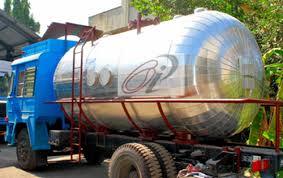
Tell us about your requirement

Price:
Quantity
Select Unit
- 50
- 100
- 200
- 250
- 500
- 1000+
Additional detail
Mobile number
Email

More Products in Tanker Insulation Category
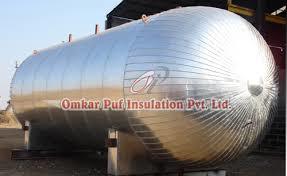
Co2 Tanker Insulation
Minimum Order Quantity : As per order , , Piece
Machines Type : Cryogenic Tanker/Tank Trailer
Features : Anticorrosive, UV resistant, weatherproof, high insulation value
Shape : Cylindrical, contoured for tanker surface
Thickness : 50 mm to 150 mm (customized as per requirement)
Weight : Depends on insulation thickness and tanker size

 Send Inquiry
Our Products
- Polyurethane Panels
- Puf Pipe Support & Clamp
- Puf Slab
- Puf Sandwich Panel
- Puf Doors
- In-Situ Foaming
- Puf Pipe Section
- Polyurethane Pipe Support
- Polyurethane Door
- PUF Saddles
- Polyurethane Floors
- High Density PUF
- Porta Cabin PUF Insulation
- Refrigerator Van Insulation
- Rippening Chamber Insulation
- Pipeline Insulation Services
- PUF Insulated Roof Panel Services
- Vessel PUF Insulation Services
- Polyurethane Cold Storage Panels for Cold Storage
- Porta Cabins for Security Guards
- Puf Block
- Polyurethane Sheet
- Insulated Panels
- Tanker Insulation


R-875, TTC Industrial Area, Near Golden Garage, Rabale,Navi Mumbai - 400701, Maharashtra, India

Mr Sanjay Valsangkar
(Director)
Mobile :08045476572
 Send Inquiry
 Send SMS
 Call Me Free
Developed and Managed by Infocom Network Private Limited.
