
Call us now :08045476572
 Send Inquiry
 Send Inquiry
Pipe Line Insulation
MOQ : As per order , , Piece
Pipe Line Insulation Specification
- Thermal Conductivity
- 0.035 - 0.045 W/mK
- Size
- Customizable as per pipe diameter and length
- Coating Type
- Aluminum foil Cladding
- Density
- 48 Gram per cubic centimeter(g/cm3)
- Surface Treatment
- Aluminum foil laminated
- Feature
- Flexible, Moisture-resistant, Fire-retardant
- Layer
- Single or multi-layer as required
- Installation Guideline
- Wrap over pipeline and secure with aluminum tape or wire mesh
- Product Type
- Pipe Line Insulation
- Material
- Glass Wool with Aluminum foil cladding
- Tensile Strength
- 12-16 KPa
- Width
- 600 mm
- Thickness
- 25 mm to 100 mm
- Application
- Thermal insulation for industrial and commercial pipelines
- Heat Conductivity
- 0.035 - 0.045 W/mK
- Color
- Yellow (Glass Wool), Silver (Aluminum Foil)
- Max Withstanding Temperature
- up to 450C
- Vapour Barrier
- Aluminum Foil provides effective vapour barrier
- Compressive Strength
- 3.4 to 7 kPa @ 10% deformation
- Water Absorption
- <1 kg/m²
- Standard Conformance
- IS 8183, ASTM C553
- Chemical Resistance
- Resistant to most chemicals and solvents
- Acoustic Properties
- Provides sound absorption and noise reduction
- Eco-friendliness
- Free from CFC, HCFC, and other ozone-depleting substances
- Resistant to Fungi and Bacteria
- Yes
- Storage
- Store in dry area, protected from direct sunlight
- Fire Resistance
- Non-combustible, class I as per IS: 8183
- Handling
- Lightweight, easy to cut and install
Pipe Line Insulation Trade Information
- Supply Ability
- 01 , , Piece Per Month
- Delivery Time
- 1-4 Week
About Pipe Line Insulation
The insulation of pipeline is done to preserve the temperature inside the line. The insulated pipes can be vertical or horizontal stretched all over the plant carrying various liquids.
For void free insulation and to avoid sweating over the surfaces proper insulation is required. Proper temperature can be maintained with minimum heat loss through proper insulation.
Insulation properties of Polyurethane Foam are much better than other insulating material hence it is preferred over other insulating materials.
Cladding can be done over the pipeline using various surfaces such as
- GI Pre coated
- Aluminium
- SS
All cladding joints will be overlapped and arranged to shed water and expansions and contractions before being sealed with water proof sealant. Generally metal cladding is done on pipelines for durability of the insulation and general aesthetics.
Where valves, flanges or other fittings are to be left exposed for operational reasons, the insulation will be butted up to these fittings and finished with preformed aluminum end caps fabricated onsite to suit the pipe diameter and insulation thickness.
Thickness of insulation varies as per the ambient temperature and the internal temperature of the pipeline to be maintained. The curves and the bends all over the pipeline can be filled together such that no voids are left.
- The density of Polyurethane foam insulation is maintained around 40kg/m3.
- Higher densities are also achieved as per the requirement of the customer.
- PIR can also be used as an insulating material.
- Dual insulation can also be done as per requirement of the customer.
Advantages with In-situ foaming in Pipe lines
- The risk for voids in the insulation is eliminated by the spray method.
- No joints in the foam.
- Homogeneous insulation.
- Increased insulation efficiency.
- Increased tightness.
- Non-corrosive and watertight cladding.
- Complete bonding to all surfaces.
- No penetration or space for accumulation of moisture.
- Excellent corrosion protection.
- Good fire fighting properties.
- Easy to Insulate Uneven Surfaces, Corners, Supports and Odd Geometrical Shapes.
Superior Thermal Performance
The insulation offers impressive heat conductivity ranging between 0.035 0.045 W/mK, making it ideal for maintaining pipe temperatures and reducing energy loss in both commercial and industrial settings. Its glass wool composition delivers reliable performance even at high temperatures.
Reliable Fire and Moisture Resistance
Rated as non-combustible, Class I according to IS: 8183, this insulation provides enhanced safety for demanding environments. The aluminum foil laminate acts as a robust vapour barrier, protecting piping systems from external moisture and minimizing the risk of condensation.
Easy and Flexible Installation
Lightweight and simple to cut, the insulation adapts seamlessly to a wide range of pipe diameters and lengths. Installation is straightforwardwrap the material over the pipeline and secure with aluminum tape or wire meshmaking it well-suited for new projects or retrofits.
FAQs of Pipe Line Insulation:
Q: How is pipe line insulation with aluminum foil cladding installed?
A: Installation is straightforwardmeasure and cut the insulation to the required length, wrap it around the pipeline, and secure it in place using aluminum tape or wire mesh. Multi-layer applications can be used for added insulation where necessary.Q: What are the key benefits of using this glass wool pipeline insulation?
A: Key benefits include excellent thermal performance, fire resistance (Class I), effective moisture and vapour barriers, resistance to fungi and bacteria, acoustic noise reduction, chemical resistance, and eco-friendly composition free from CFC and HCFC.Q: When is it appropriate to use this type of pipeline insulation?
A: This insulation is suitable for use in industrial and commercial piping systems that require robust thermal protection, fire safety, moisture control, and noise reduction, particularly where operating temperatures can reach up to 450C.Q: Where can this product be applied?
A: It is ideal for use on a variety of pipelines in industrial facilities, commercial buildings, power plants, and refineries, catering to customized pipe diameters and lengths, both indoors and in protected outdoor installations.Q: What standards does this pipeline insulation conform to?
A: The insulation conforms to IS 8183 and ASTM C553 standards, ensuring its quality, safety, and effectiveness for thermal and acoustic applications.Q: How does the vapor barrier function in this insulation system?
A: The aluminum foil cladding functions as an effective vapor barrier, preventing moisture ingress and minimizing the risk of condensation on the pipe surface, thereby extending the life of the insulation and protecting the pipe.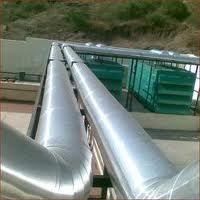
Tell us about your requirement

Price:
Quantity
Select Unit
- 50
- 100
- 200
- 250
- 500
- 1000+
Additional detail
Mobile number
Email

More Products in In-Situ Foaming Category
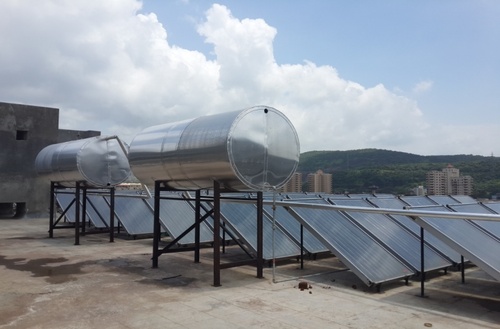
Solar Appliances Insulation
Minimum Order Quantity : As per order , , Piece
Thermal Conductivity : 0.0350.045 W/mK
Product Type : Solar Appliances Insulation
Heat Conductivity : 0.0350.045 W/mK
Max Withstanding Temperature : up to 650C
Size : Customized
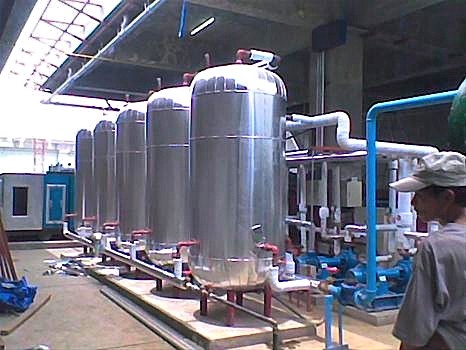
Tank Insulation
Minimum Order Quantity : As per order , , Piece
Thermal Conductivity : 0.0350.040 W/mK
Product Type : Tank Insulation
Heat Conductivity : 0.0350.040 W/mK
Max Withstanding Temperature : Up to 400C
Size : Custom Sizes Available
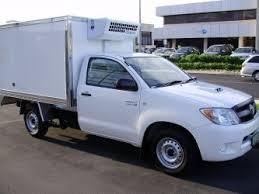
Refrigrated van insulations
Minimum Order Quantity : As per order , , Piece
Thermal Conductivity : 0.0240.026 W/mK
Product Type : Refrigerated Van Insulation Panel
Heat Conductivity : 0.0240.026 W/mK
Max Withstanding Temperature : 40C to +80C
Size : Customfit to van/truck body dimensions
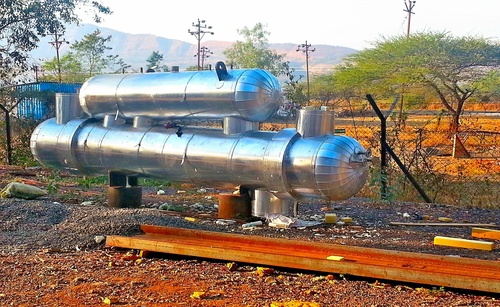
VESSEL INSULATION
Minimum Order Quantity : As per order , , Piece
Thermal Conductivity : 0.035 0.043 W/mK (at 25C)
Product Type : Thermal Insulation Blanket / Slab / Pipe Section
Heat Conductivity : 0.035 0.043 W/mK (at 25C)
Max Withstanding Temperature : Up to 750C (depends on material type)
Size : Length: 1 m / 1.2 m (custom sizes available)

 Send Inquiry
Our Products
- Polyurethane Panels
- Puf Pipe Support & Clamp
- Puf Slab
- Puf Sandwich Panel
- Puf Doors
- In-Situ Foaming
- Puf Pipe Section
- Polyurethane Pipe Support
- Polyurethane Door
- PUF Saddles
- Polyurethane Floors
- High Density PUF
- Porta Cabin PUF Insulation
- Refrigerator Van Insulation
- Rippening Chamber Insulation
- Pipeline Insulation Services
- PUF Insulated Roof Panel Services
- Vessel PUF Insulation Services
- Polyurethane Cold Storage Panels for Cold Storage
- Porta Cabins for Security Guards
- Puf Block
- Polyurethane Sheet
- Insulated Panels
- Tanker Insulation


R-875, TTC Industrial Area, Near Golden Garage, Rabale,Navi Mumbai - 400701, Maharashtra, India

Mr Sanjay Valsangkar
(Director)
Mobile :08045476572
 Send Inquiry
 Send SMS
 Call Me Free
Developed and Managed by Infocom Network Private Limited.
