
About PUF Saddle
As an eminent firm in the industry, we are engrossed in providing the best quality collection of PUF Saddle. Our adept team of professionals manufactures this saddle with the use of quality-assured polyurethane foam. Provided saddle is widely used for supporting pipes in various industrial pipelines with excellent insulation property. In order to suit the several needs of our clients, this PUF Saddle is available with us in diverse sizes.
Features:
- Enhanced durability
- Smooth edges
- Rigid design
- Accurate dimension
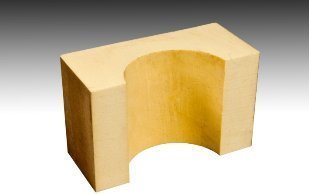
Superior Moisture and Thermal ProtectionThanks to its high closed cell content and exceptional moisture resistance, the PUF Saddle effectively prevents water vapor ingress and minimizes heat transfer. This performance is ideal for chilled water and HVAC systems where thermal efficiency and protection from condensation are critical. Its low thermal conductivity further reduces energy losses, ensuring reliable, long-lasting pipe insulation.
Versatile and Easy-to-Install DesignEngineered in a segmented (split) saddle shape, the PUF Saddle enables straightforward installation around insulated pipes, regardless of materialbe it steel, copper, PVC, or composite. The design directly addresses ease of handling and fitment, greatly reducing installation time and potential thermal bridging at support points. Customizable widths and thicknesses ensure compatibility with a wide pipe size range.
Long-Term Performance and Fire SafetyThe rigid polyurethane foam construction provides the saddle with superior compressive and tensile strength, ensuring pipe support even in demanding industrial environments. Its robust fire rating (ASTM Class 1/B) and excellent resistance to aging grant an operational lifespan exceeding 25 years under normal conditions, highlighting its value as a safe and cost-effective insulation solution.
FAQs of PUF Saddle:
Q: How is the PUF Saddle installed on pipes of different materials?
A: The PUF Saddle is designed as a segmented saddle, split into two parts for easy installation. Simply place each half around the insulated pipe at the support locationsuitable for steel, copper, PVC, and composite pipesbefore securing it with the optional cladding or fasteners to ensure effective pipe insulation and support.
Q: What benefits does using a PUF Saddle offer in HVAC and industrial applications?
A: Using a PUF Saddle provides excellent insulation due to its low thermal conductivity, robust support owing to its high compressive strength, and long-term performance with a service life of over 25 years. It also protects against moisture ingress and reduces chances of thermal bridging at pipe supports, ensuring system efficiency and durability.
Q: Where can PUF Saddles be applied for maximum efficiency?
A: PUF Saddles are ideal for use in chilled water lines, HVAC systems, and chemical or petrochemical plant piping. They effectively minimize thermal losses and prevent moisture intrusion at pipe supports, making them suitable for environments requiring enhanced thermal insulation and moisture protection.
Q: What process is followed to customize the PUF Saddle for specific pipe sizes?
A: PUF Saddles are manufactured in various widths and thicknesses based on nominal pipe diameter, typically ranging from 50 mm to 800 mm in width and 25 mm to 150 mm in thickness. Customization is achieved by providing the required pipe dimensions to the manufacturer or supplier, ensuring a precise fit and maximum insulation performance.
Q: How does the fire rating of the PUF Saddle enhance safety?
A: The PUF Saddle meets Class 1 or Class B fire rating according to ASTM standards, which means it offers high resistance to flame spread and smoke development. This feature is critical in industrial and commercial settings for ensuring safety compliance and minimizing fire risks around insulated pipes.
Q: What maintenance is required to ensure the performance and longevity of the PUF Saddle?
A: The PUF Saddle requires minimal maintenance due to its excellent moisture and chemical resistance. Regular inspection of the insulation and cladding for mechanical damage is recommended, but under normal operating conditions, the material maintains its integrity and insulating properties for over 25 years.
